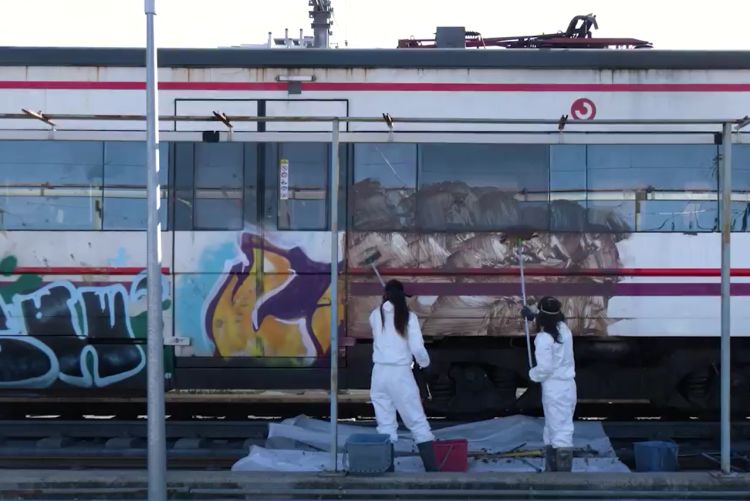
Between 2023 and 2024, approximately 90,000 square meters of graffiti have been cleaned from trains nationwide on Renfe trains, representing an expenditure of around €25 million annually. This sum covers direct cleaning costs, such as labor, cleaning agents, protective gear, and indirect expenses including waste management and preventive security measures.
In the Madrid region, known for its extensive commuter rail services, Renfe removed 19,373 square meters of graffiti in 2023. The following year, this figure increased to 22,926 square meters. Specifically, Madrid’s Cercanías system accounted for the cleaning of 19,323 square meters across more than 1,000 incidents in 2024 alone.
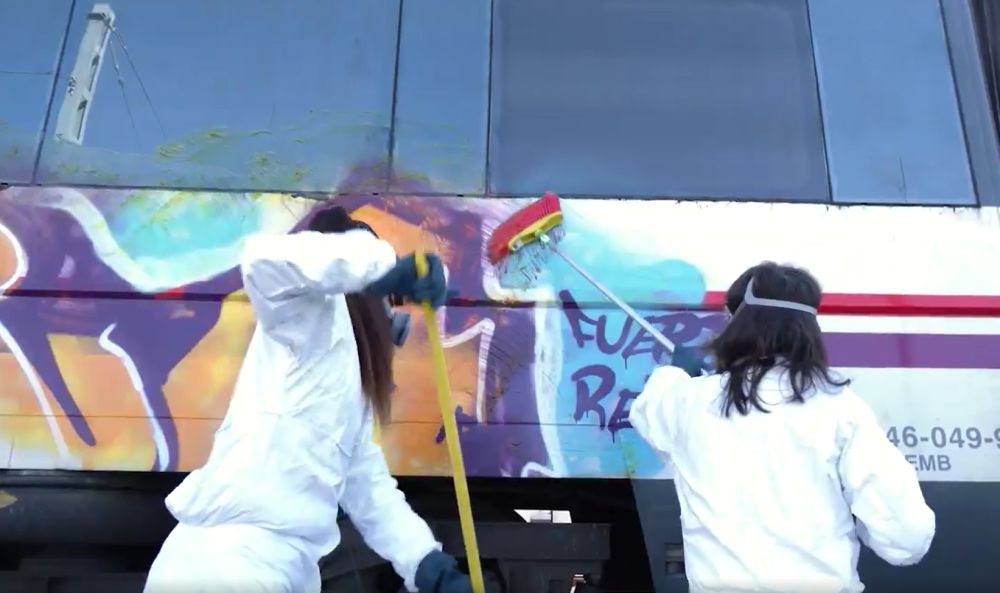
The process of graffiti removal demands considerable human resources, requiring approximately 10,000 work hours each month, according to standardized operational guidelines. Additionally, trains impacted by graffiti frequently undergo extended maintenance periods, resulting in service interruptions or temporary reductions in fleet availability.
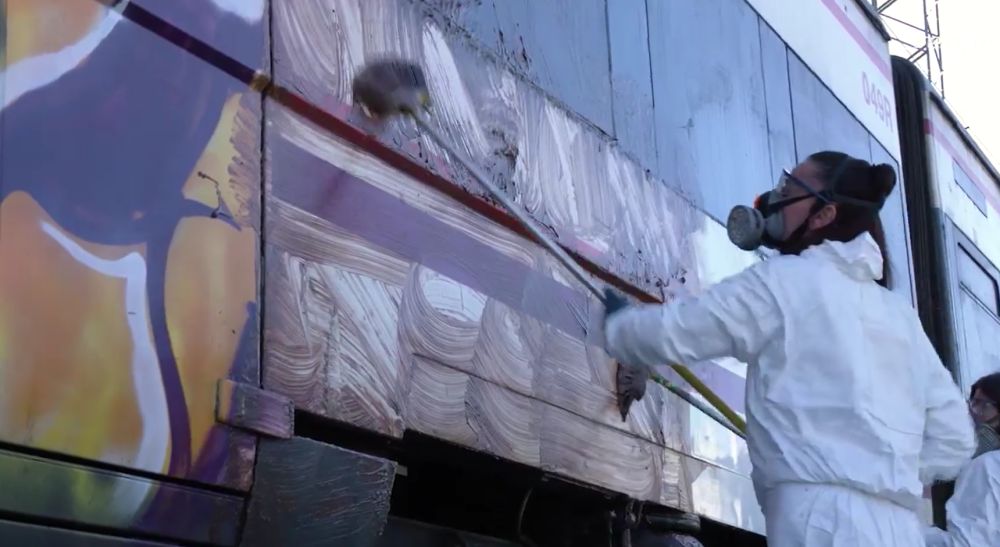
Renfe highlighted environmental considerations linked to graffiti. Annual paint usage by vandals is estimated at 16,000 liters, containing substances such as benzene and 1,3-butadiene, generating about 40,000 aerosol cans classified as hazardous waste. Renfe employs specialized environmental management practices, including absorbent mats, to reduce contamination risks during the cleaning process.
Energy usage related to graffiti cleanup logistics is also noteworthy. Transporting affected rolling stock to dedicated cleaning centers annually consumes approximately 400,000 kWh of electricity. According to Renfe, this energy use corresponds roughly to the daily consumption of 44,000 average households or keeping 36 million standard light bulbs lit for one hour.