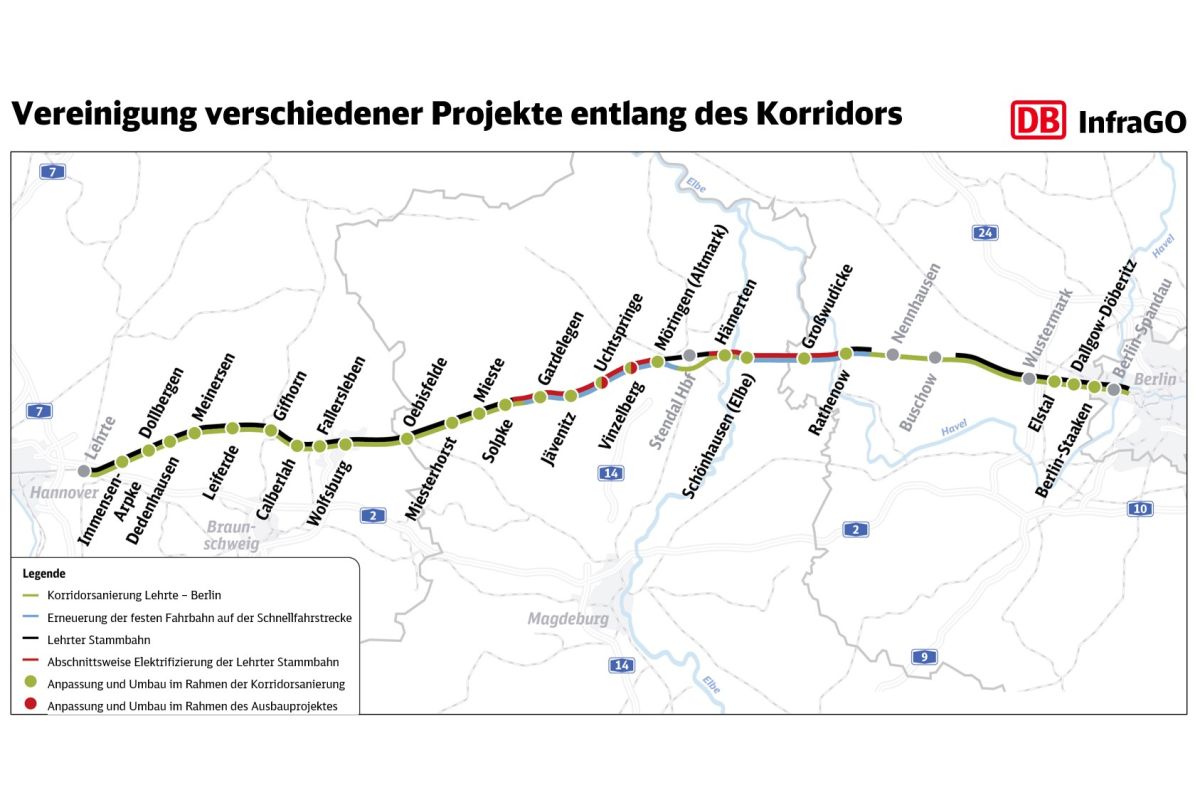
The 221-kilometre corridor is one of the main rail axes between Berlin and North Rhine-Westphalia. More than 400 regional and long-distance trains and around 90 freight trains use the route each day.
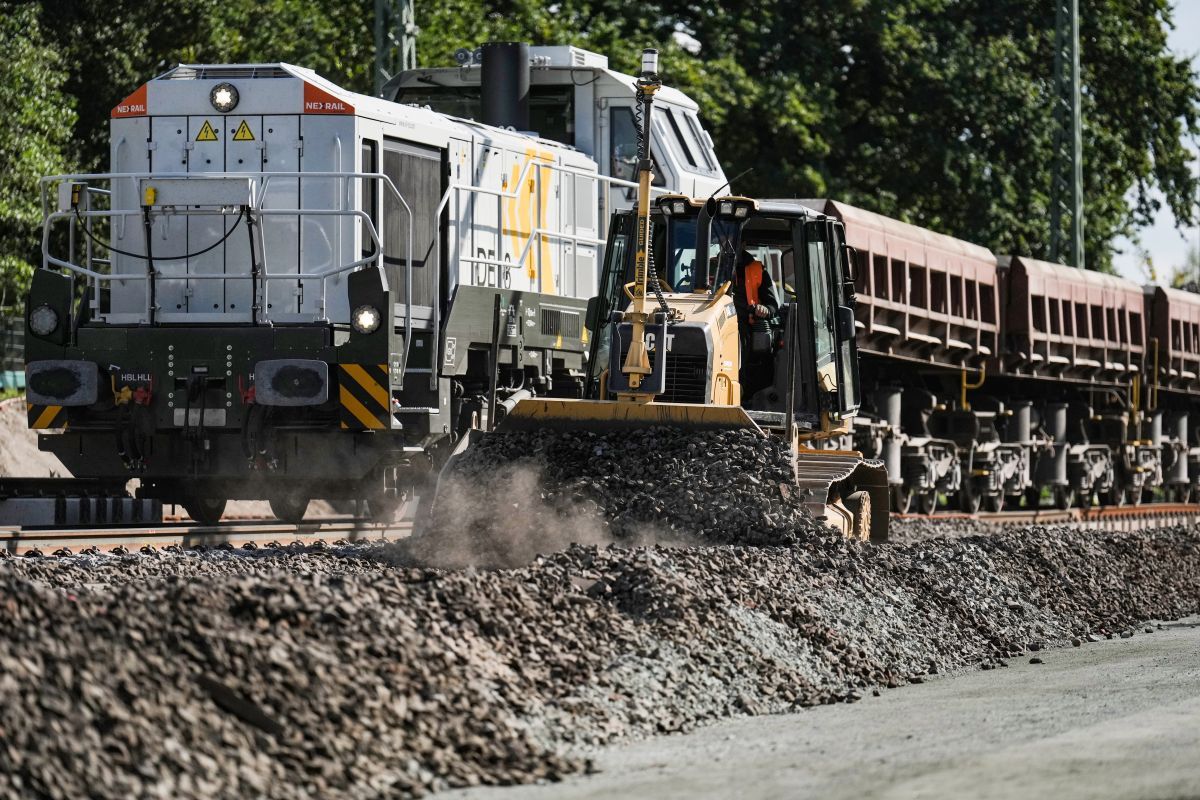
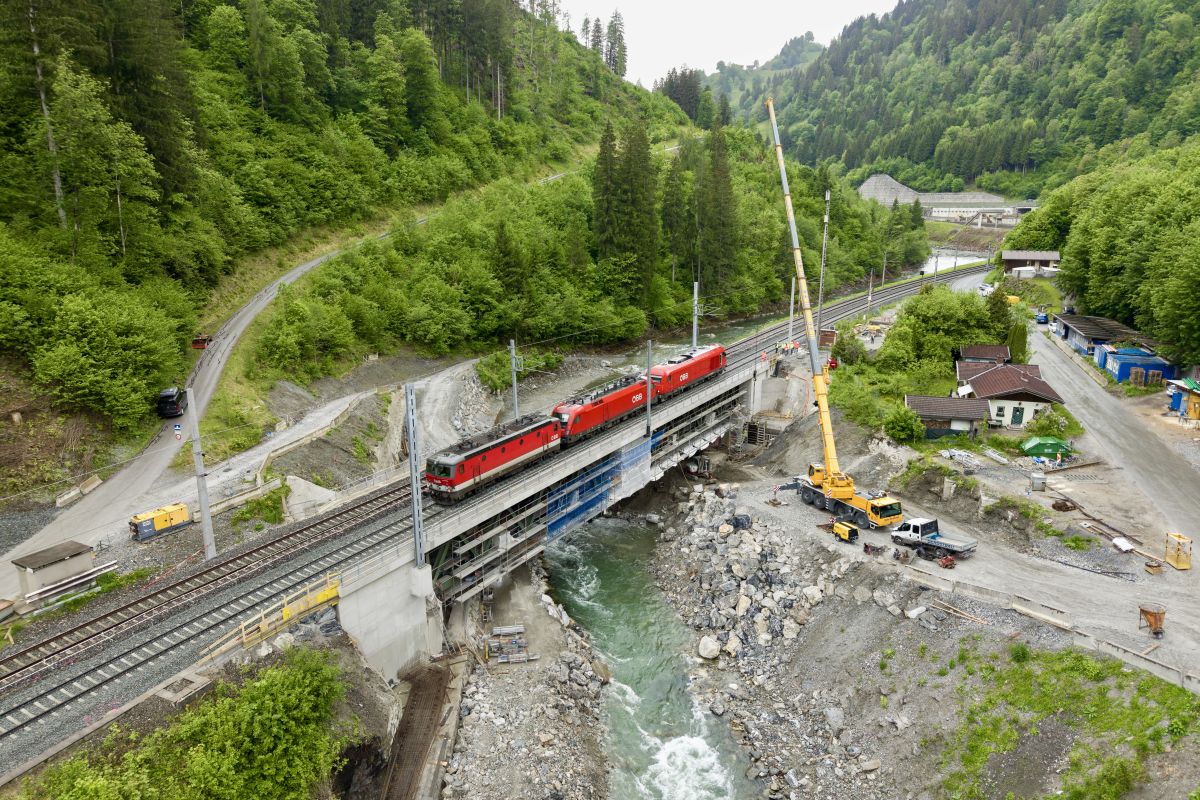
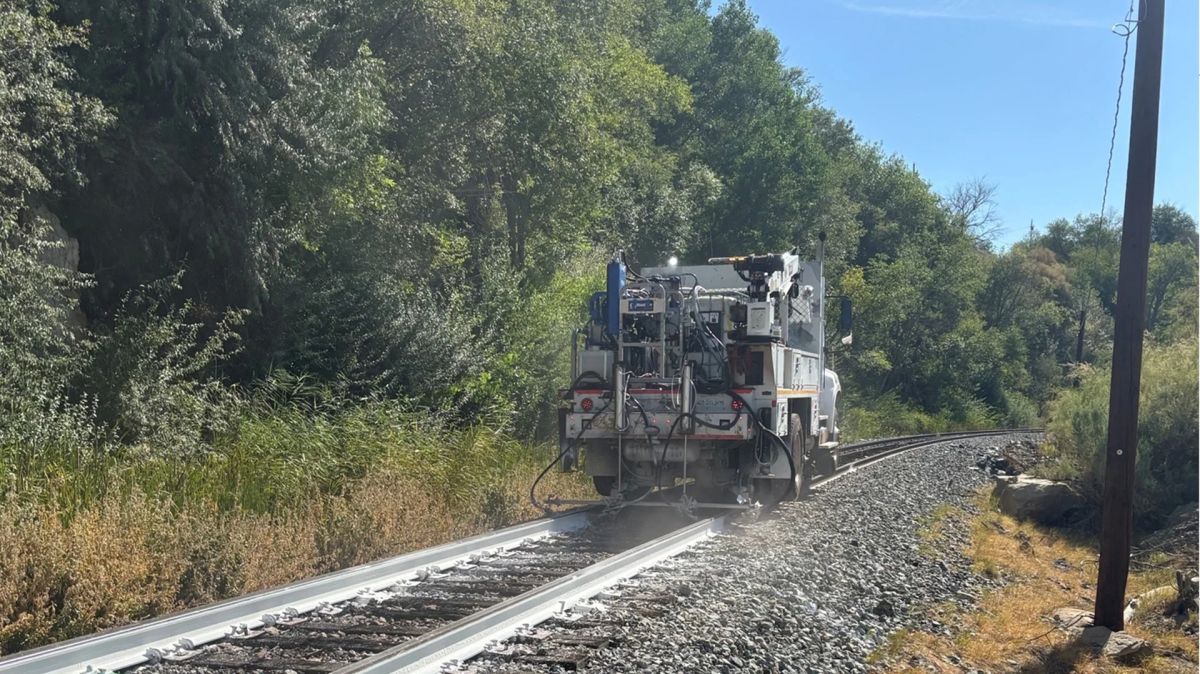
DB InfraGO plans to renew more than 175 switches, 260 kilometres of track and 13 kilometres of noise barriers by the end of 2027. The programme also includes the modernisation of 25 stations, works on bridges, culverts and point-heating systems, and maintenance of overhead line, signalling and control systems.
The works will be carried out in several phases. From October to December 2026, the eastern section between Fallersleben and Berlin-Spandau will be closed. From December 2026 to October 2027, some trains will be able to use the parallel Lehrter Stammbahn on single-track sections.
A full closure will also be needed on the western section between Lehrte and Fallersleben from February to July 2027. The final phase will again close the eastern section between Fallersleben and Berlin-Spandau from October to December 2027.
During the first and final construction phases, long-distance trains between Hannover and Berlin will be diverted and will alternately stop in Braunschweig and Magdeburg. Journey times between Hannover and Berlin will increase by 60 to 80 minutes.
The Amsterdam–Berlin service, currently operated with four train pairs per day, will be diverted via Hamburg, adding around 70 minutes to the journey time.
Between December 2026 and October 2027, long-distance trains towards Hannover will use the regular route via Wolfsburg, while trains towards Berlin will continue to run via Magdeburg.
Regional trains will run as close as possible to the closed sections. Where rail services cannot operate, replacement buses will be provided. For the first construction phase, the buses will be operated by go.on.