Poland’s rail intermodal market opened 2026 with higher volumes and a larger share of national rail freight, confirming that containerised traffic is growing faster than the wider freight market.
The increase was visible across the main indicators. Operators moved almost 790,000 TEU, up from around 681,000 TEU in the same quarter of 2025, while transport performance reached 2.58bn tonne-km. The figures point to both higher volumes and longer or more productive movements, rather than only a short distance rebound.
The market also became more relevant within Polish rail freight. Intermodal accounted for 19.2% of rail freight transport performance in Q1 2026, compared with 16.6% a year earlier. By mass, its share increased from 12.7% to 15%.
The annual growth contrasts with a weaker comparison against the previous quarter. Compared with Q4 2025, intermodal traffic declined by mass, TEU, number of units and tonne-km. This suggests that the first-quarter result was stronger year on year but did not exceed the late-2025 level.
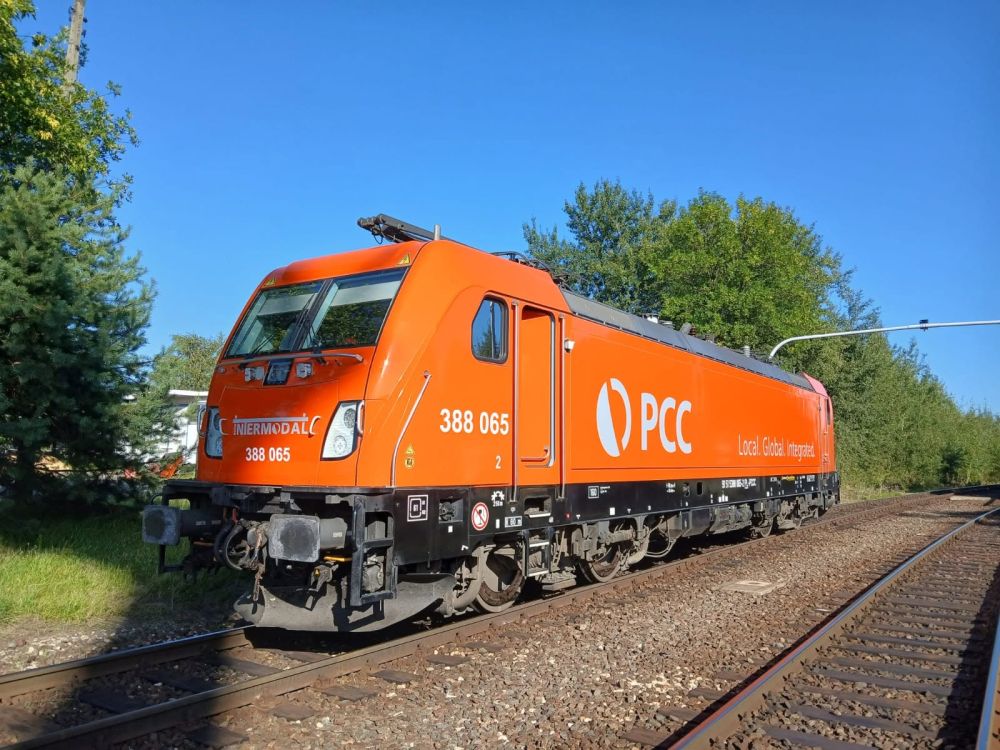
The operator structure remains concentrated. PCC Intermodal and PKP Cargo each held close to one fifth of the market by mass, followed by DB Cargo with around one tenth. Together, the three largest operators accounted for almost half of intermodal freight moved by rail in Poland.
PCC Intermodal led the market both by mass and transport performance. PKP Cargo remained close behind and increased its share year on year, while DB Cargo lost ground in both measures. Smaller operators also gained space, including Service and Logistics Group, Orlen Kolej and Eurotrans.
A total of 32 rail freight operators reported intermodal activity in Q1 2026, down from 34 a year earlier. The decline in the number of active operators, combined with higher total volumes, points to growth being absorbed mainly by established players rather than through a broader increase in market participants.