The sample — 1,000 respondents, all making at least eight trips of 20+ km per month — produces a picture that contradicts several pieces of received industry wisdom.
Rail's share among frequent travellers sits at 18%. Car dominates at 62%, bus at 20%. SVOD's stated objective is to lift the rail share by five percentage points within a decade. The survey was designed to identify what would have to change for that to happen.
The attribute hierarchy: speed and comfort lead, ecology is irrelevant
Asked which transport attributes matter to them, respondents ranked speed (~22%), comfort (~20%), accessibility (~19%), and reliability (~12%) at the top. Low cost came in at roughly 10%. Space, safety, ability to work, and ability to socialise during the journey trailed at 4–6% each.
Environmental footprint registered at the bottom of the list. Among Czech regular travellers, ecology is explicitly not a decision driver — a finding that should temper marketing strategies built around modal-shift messaging and decarbonisation appeals. Buyers are choosing on time, comfort, and convenience.
When the same attributes are mapped against actual mode choice, rail loses on most of the metrics passengers prioritise. Car beats train on speed, comfort, accessibility, and reliability. Train wins clearly only on directness of connection where it exists — which is precisely the attribute most cited as a barrier where it doesn't.
What the train is currently used for
Rail captures leisure and visits more readily than commuting. Among daily travellers, car takes roughly 38% of trips and train around 10%. Among those travelling several times a year, the ratio inverts — train hits 25%, car drops below 5%. The train is still, for most Czechs, an occasional mode rather than a daily one.
Trip purpose breaks down as work or school 52%, shopping 18%, leisure 13%, visits 10%, business travel 4%. Arrival and departure peaks survive but are visibly flatter than pre-pandemic patterns: morning arrivals concentrate at 6:00–8:00, afternoon departures at 14:00–17:00, but the shoulders have thickened. Hybrid working has redistributed demand across the day, with implications for capacity planning that assumes a sharp twin peak.
The strongest pro-rail demographic is women under 29 — the group with the highest agreement on rail's positive attributes and the highest stated willingness to use it.
The top 10 barrier list: it's about the timetable, not the trains
Asked what bothers them about rail, respondents produced a ranking that puts service design ahead of rolling stock quality:
- Trains don't run when I need them
- Station is too far from my origin or destination
- Trains are overcrowded
- Trains or stations are dirty
- Frequency is too low
- Trains are old and outdated
- Train is not price-competitive
- Can't carry what I need to transport
- Trains or stations feel unsafe
- Onboard services are missing
The top five are operational and network issues — timetable, catchment, capacity, cleanliness, frequency. Rolling stock age comes sixth. Comfort, the attribute respondents say they value second-most, ranks last as a complaint, suggesting the existing fleet is acceptable on comfort terms but losing passengers on when and where it runs.
Onboard services and barrier-free access scored low both as priorities and as complaints. Respondents do not demand them, though when present they are welcomed. For procurement teams specifying new fleets, this is a useful signal: passengers will not pay a comfort premium for catering or premium class features that come at the expense of frequency or capacity.
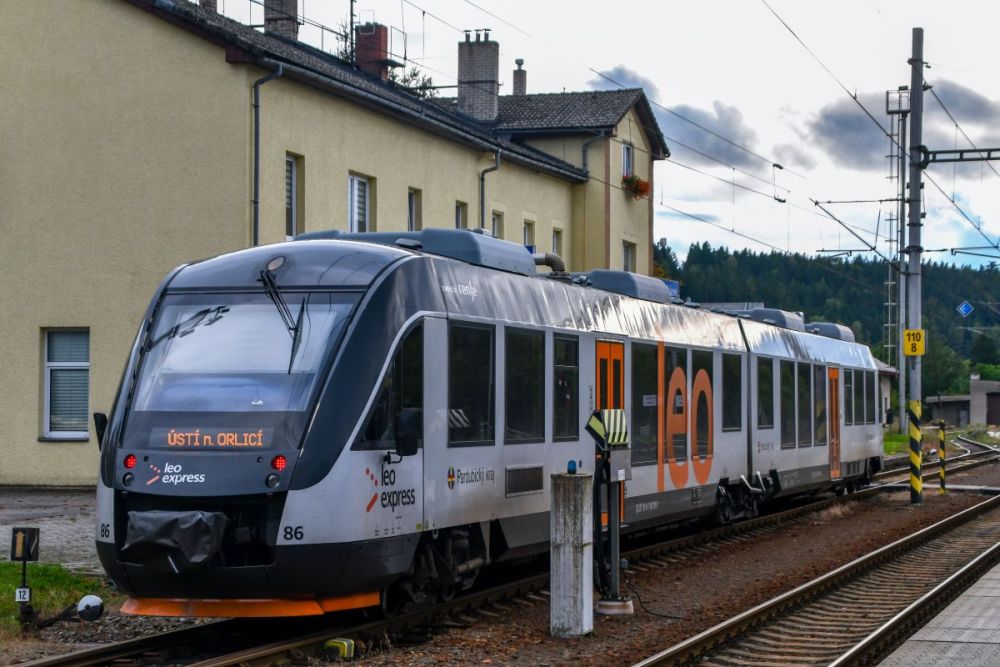
13 reasons why passengers would travel by rail again
The "what should change" ranking maps closely onto the barrier list, with one notable shift in emphasis:
- Add services, shorten intervals
- Cut fares
- Improve reliability, reduce cancellations and engineering closures
- Improve station accessibility
- Introduce more modern rolling stock with greater capacity
- Improve cleanliness
- Speed up journeys, add direct services
- Improve onboard services
- Build more parking at stations
- Improve barrier-free access
- Improve information provision
- Improve safety
Price moves up to second place when respondents are asked about solutions, having ranked seventh among complaints. The pattern suggests fares are tolerated rather than welcomed — passengers don't list price as a top reason they don't take the train, but they readily list cheaper fares as something that would make them take it more often.
The clearest actionable conclusion: a regular-interval (takt time) timetable with shorter headways is the single most effective intervention. It addresses the top complaint (trains don't run when needed) and the top requested change in one move. The Czech rail system's incomplete rollout of clockface scheduling outside Prague's commuter belt and the main long-distance arteries is — according to the people most likely to switch — the binding constraint.
Regional variation in service perception in Czechia
Station quality scores highest in the Moravian-Silesian region. Operator quality scores highest in northern Bohemia (Liberec and Ústí regions). Parking at stations is rated worst in Prague — a finding consistent with constrained urban land but relevant to any park-and-ride strategy. Good station catchment was reported in towns of 30,000+ inhabitants; below that threshold, "the station is too far" becomes a structural problem that frequency improvements alone won't fix.
Implications for procurement and operations
Several findings cut against current investment priorities:
- Capacity beats luxury. Respondents want more seats and more services, not more amenities per seat. Specifications that trade interior density for catering space or premium zones are working against stated demand.
- Modernisation matters but ranks fifth. New rolling stock is welcome but won't solve the participation problem on its own. An operator running a frequent, reliable, direct service with older rolling stock will outperform one running a sparse, unreliable service with new trains.
- Accessibility infrastructure underperforms politically mandated investment levels. Barrier-free access is a regulatory requirement and a social good, but the survey shows it does not change ridership decisions for the general population. This is worth acknowledging rather than overselling in business cases.
- Environmental marketing has limited traction. Czech regular travellers are not switching to rail for ecological reasons. Operators marketing CO₂ savings to this audience are pushing on a string.
The survey was conducted among SVOD Bohemia members, which include Arriva, České dráhy, RegioJet, Leo Express, AŽD, and Die Länderbahn, with Alstom as observer. Fieldwork covered 1,000 respondents structurally matched to Czech population distribution, with slight overrepresentation of working-age respondents and underrepresentation of Prague and large-city residents compared with the national average.