III. Software and digitalization — Serbia, Slovenia and beyond
RAILMARKET.com: In January 2024, Serbia's Ministry of Construction, Transport and Infrastructure signed for TPS.plan, the Hacon-developed timetable and train-path management software. Where is the implementation today, and what measurable change should Serbian operators and passengers expect once it is live?
Tanja Kienegger: The TPS.plan implementation in Serbia is already well advanced. Following the contract signed in January 2024, Siemens Mobility and its subsidiary Hacon have completed the system installation, customer‑specific configuration and the creation of a full digital copy of Serbia’s approximately 3,300‑kilometre rail network. Central timetable and train‑path planning processes are now automated and integrated with external monitoring systems.
As the system moves into full operational use, operators will benefit from significantly faster timetable creation, fewer planning conflicts and reduced error rates. Passengers will experience the impact directly through more stable timetables, better coordination between passenger and freight services, and higher overall reliability.
Following the contract signed in March 2024, we are happy that the implementation of TPS.plan in Serbia is already completed. In detail, Siemens Mobility and its subsidiary Hacon have completed the system installation, customer‑specific configuration and the creation of a full digital copy of Serbia’s approximately 3,300‑kilometre rail network. Central timetable and train‑path planning processes are now automated and integrated with external monitoring systems.
As the system moves into full operational use, operators will benefit from significantly faster timetable creation, fewer planning conflicts and reduced error rates. Passengers will experience the impact directly through more stable timetables, better coordination between passenger and freight services, and higher overall reliability — a tangible improvement delivered within Serbia’s 2021–2029 Railway Modernization Programme.
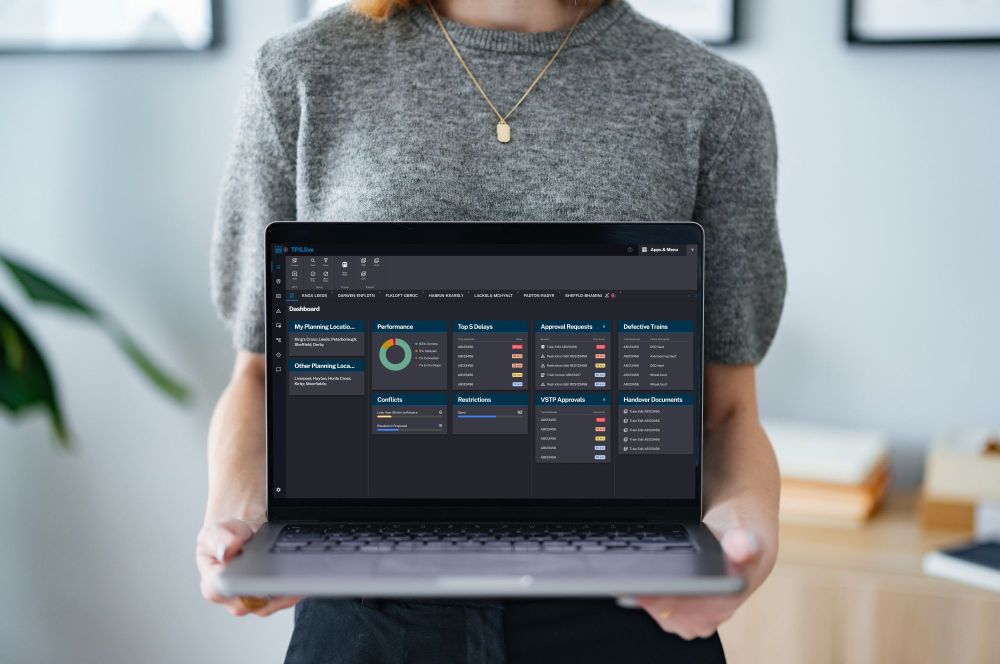
RAILMARKET.com: The TPS.plan project in Slovenia is approaching its final stage. Could you walk us through the current status, what influenced the timeline, and what will happen after go‑live?
The TPS.plan project in Slovenia is in its final phase, with final customer tests underway. Completion is expected by this summer. After that, the maintenance contract will begin. The customer is planning to start scheduling and constructing the train paths in fall 2026.
RAILMARKET.com: Across the Siemens Mobility software portfolio - Train2Cloud, Signaling X, RailXplore, MaaS - which products are most relevant for CEE infrastructure managers and operators in the next three years, and where do you see the budget being there?
Tanja Kienegger: In the next years, the strongest relevance for infrastructure managers and operators will be software that directly improves reliability, capacity, and cost efficiency of existing assets. This puts solutions such as Signaling X and RailXplore at the top of the agenda. Virtualized signaling, cloud-based interlockings, and centralized traffic control are becoming real game-changers, allowing operators to manage large parts of the network remotely, increase capacity, and reduce maintenance costs by up to 30 percent. Budgets here are increasingly available, as these investments are closely linked to network performance, safety, and TEN-T corridor requirements.
At the same time, Train2Cloud and digital asset management are gaining traction, especially where operators face aging fleets and skills shortages. Predictive maintenance and data‑driven decision‑making help secure availability and reduce lifecycle costs. MaaS solutions remain more selective and city‑specific, while automated train operation is progressing first in metros and suburban networks.
IV. Infrastructure and electrification — the sub‑Balkan corridor
RAILMARKET.com: The Tvarditsa 110/25kV traction substation modernization, together with the Nikolaevo section post, is on Bulgaria's sub-Balkan Sofia–Karlovo–Burgas corridor - a route that completes the freight link between Germany and Turkey via Vectron-homologated track. How does this project fit into Siemens Mobility's broader electrification and SCADA business in CEE?
Tanja Kienegger: The modernization of the Tvarditsa 110/25 kV traction substation and the Nikolaevo section fits squarely into Siemens Mobility’s core electrification and SCADA business in Central and Eastern Europe. On the Sofia–Karlovo–Burgas corridor, Siemens Mobility delivered key 110 kV and 25 kV traction power equipment together with protection systems based on SIPROTECT 5 and a fully integrated SCADA and remote-control solution.
The project demonstrates Siemens Mobility’s ability to combine high‑voltage traction power, digital protection and centralized control into a single, interoperable system, connected to the regional control center in Plovdiv. This integrated approach is central to our electrification strategy in CEE, supporting reliable operation of major international freight corridors and long‑term infrastructure modernization.
RAILMARKET.com: Power supply and signalling are usually invisible to passengers but are the real bottleneck for capacity and speed. In your view, where is CEE most underinvested today - in the rolling stock fleet, in signalling and ETCS rollout, or in traction power and substations - and what is the right sequencing for an operator with limited budget?
In CEE, the most consistent underinvestment is in signalling, ETCS, and the digital control of traction power rather than in rolling stock itself. Many operators already have trains capable of higher performance, but capacity and reliability are constrained by legacy signalling and power supply that are not digitally managed. For an operator with a limited budget, the right sequencing is therefore to invest first in digital upgrades to signalling and power infrastructure, because this allows more capacity, better punctuality and more efficient energy use from the existing fleet. Once these constraints are removed, investments in new rolling stock deliver much higher and more predictable returns.
V. Urban rail and metros
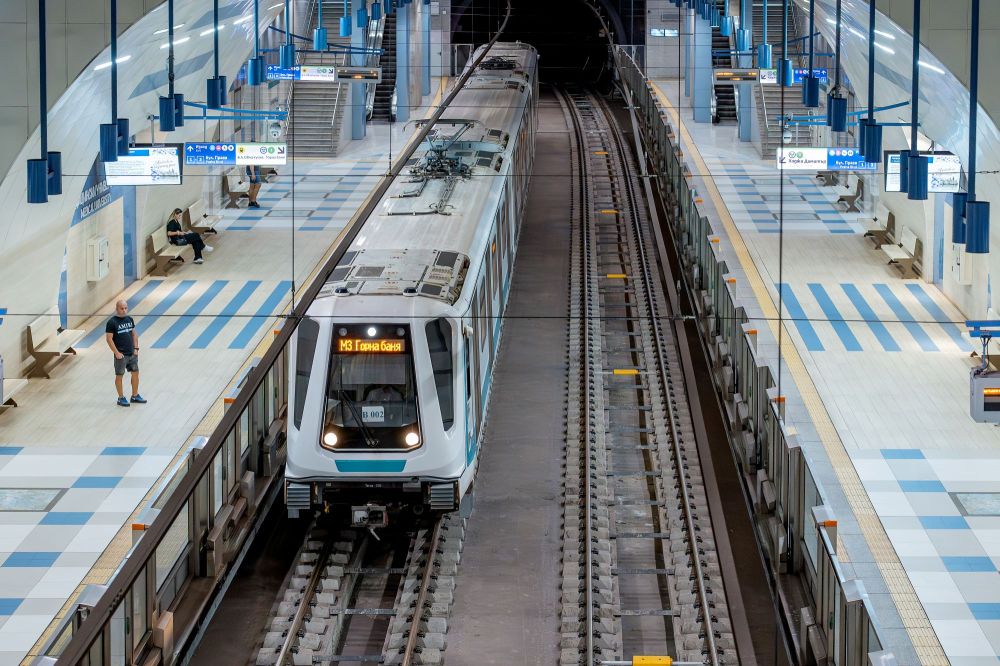
RAILMARKET.com: The Sofia Metro Line 3 fleet will reach 38 Inspiro trainsets when the SIMETRO consortium delivers the final eight units for the Slatina Tsarigradsko Shose extension scheduled for the second half of 2026. Are deliveries on track, and what is the next stage Siemens Mobility is preparing to bid for on the Sofia network?
Tanja Kienegger: Dynamic tests with trains for the new 3 metro stations have already been completed, and the remaining safety assessments are underway. The start of passenger operation for the extension is expected in the summer. At the same time, the final eight Inspiro trainsets are already in production, with deliveries scheduled to begin later this year.
Regarding the Slatina–Tsarigradsko Shose extension, civil works are still ongoing. Based on the current construction status, the extension is not expected to be completed before 2028.
Usually, we do not comment on which tenders we will be participating in, but we clearly would be interested in evaluating upcoming opportunities to further modernize the railway for our customers and their passengers.
RAILMARKET.com: Sofia's order split - Inspiro on Line 3, Škoda's four-car trainsets on Lines 1, 2 and 4 - is a useful reminder that metro operators increasingly multi-source. How does Siemens Mobility differentiate Inspiro in a CEE market where the price-driven competitor (Škoda, in this case CAF or Stadler in others) is genuinely credible?
Tanja Kienegger: Sofia is a good example of how metro operators increasingly work with mixed fleets and multiple suppliers. Siemens Mobility is very comfortable in this environment, as collaboration with different partners is a well‑established part of how we deliver projects.
We have extensive experience working in the consortia and alongside other rolling stock manufacturers. This includes metro projects in Warsaw and Sofia with Newag, as well as new train projects delivered together with Stadler in Copenhagen and Berlin. These references show our ability to integrate technologies, manage interfaces, and ensure smooth delivery in complex, multi‑supplier settings.
For operators, this means flexibility, interoperability, and reduced delivery risk. Siemens Mobility is a proven partner in multi‑source strategies, capable of supporting long‑term network development across different lines and fleets.

VI. Closing — your read of the region
RAILMARKET.com: Siemens Mobility Austria has run the CEE sales region for years. You came to Siemens from ÖBB-Infrastruktur, where you pushed renewable traction power toward the 80% target for 2030. Almost three years into the CEO role, what is the most underappreciated structural advantage CEE has for rail?
Tanja Kienegger: It’s a combination of strong rail fundamentals and highly skilled people across the region. Rail remains a core part of the national transport systems, supported by dense networks, solid engineering traditions and teams with deep operational know‑how. From a Siemens Mobility perspective, the CEE region brings together experienced railway professionals, system engineers and project managers who understand both legacy infrastructure and modern digital solutions. This creates a strong basis for modernization – allowing operators to improve performance and sustainability by building on existing assets rather than starting from scratch.
RAILMARKET.com: If you had to name one project, you expect Siemens Mobility to be signing in CEE in 2026 or 2027 that the market is not yet talking about, what would it be?
Tanja Kienegger: Indeed, we are working on some interesting projects we might announce this or next year. But at the moment, I am sorry, Siemens Mobility does not comment on contracts that have not yet been finalized as a rule. That said, if you are looking for signals rather than announcements, the recent project in Romania is a good illustration of what really matters for Siemens Mobility – and for the CEE market.
Romania shows how the region is moving beyond isolated upgrades towards integrated, long-term modernisation of rail systems: combining infrastructure, digitalization and operational efficiency. Projects like this are important not only because of their scale, but because they set up a pattern that other CEE countries are now looking at closely. This is the space where we see momentum building for 2026 and 2027.
RAILMARKET.com: Thank you for the interview