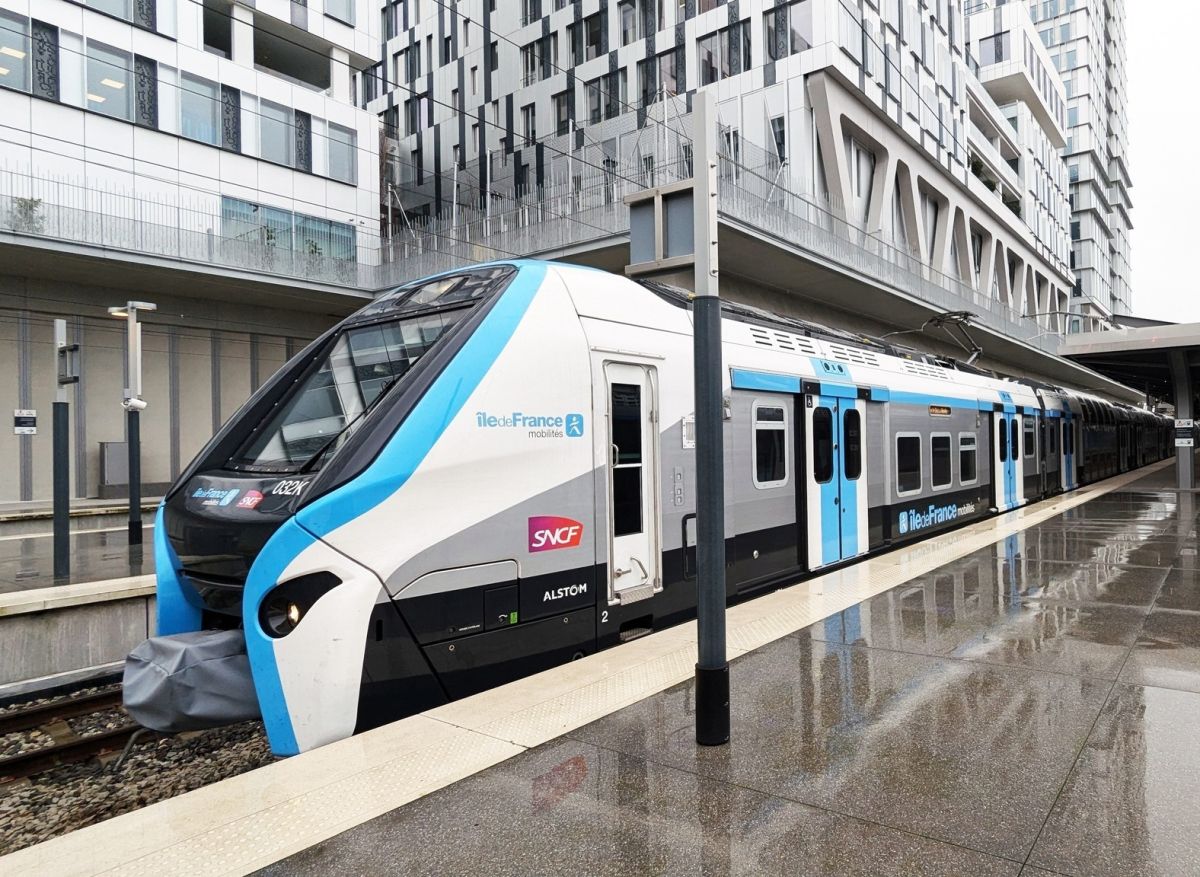
The Paris Region Institute and Transilien SNCF Voyageurs have published a study on how climate-related weather events affect mobility in Île-de-France.
The study was prepared with the Mass Transit Academy, DRIEAT, the Paris Île-de-France Chamber of Commerce and Industry and Sustainable Mobilities. One survey covered more than 1,000 Île-de-France residents aged 18 and over, while the other covered 500 companies.
Île-de-France has recorded an average of 50 days of exceptional weather conditions per year over the past three years. The region has 3.6m residents living in urban heat islands and records 41m journeys per day, including 9m by public transport.
The study shows a clear difference between transport modes. Cycling is the most weather-sensitive mode, falling by 24% during heavy rain and by 18% at 0°C compared with the annual average temperature of 14°C.
Rail-based mass transit is less exposed to daily weather variation than road or cycling. RER and train ridership falls by 2% in heavy rain and by 4% at 30°C, while metro ridership is largely unaffected, reflecting the underground nature of much of the network.
Roads are more vulnerable to disruption. During rain, road traffic falls by 3%, but congestion increases by 31%. During five winter weather events analysed by the study, road traffic decreased by 18%, while congestion measured in kilometres of traffic jams rose by 54%.
Snow remains the most disruptive weather event for mobility in the region. It was cited by 72% of residents and 95% of companies, mainly because of its immediate effect on the road network.
During the winter events studied, cycling fell by 44% and bus use by 33%. Metro ridership fell by only 1%, while tram, RER and train ridership fell by 12%.
Heatwaves are identified as the larger long-term challenge. The number of extreme heat days in Île-de-France could triple by 2050, according to the study.
During heatwaves, mobility declines across all main modes. The fall ranges from 6% to 9% for trams, cars, metro and bicycles, rising to 12% for RER and trains and 20% for buses.
The study also highlights a communication issue for rail operators. Passengers appear to understand snow-related disruption better than heat-related disruption: 49% accept a 30-minute longer journey during snow, but only 23% accept the same increase during a heatwave.
Remote work is identified as a demand-management tool during climate events. Among workers able to work remotely, 66% prefer to stay home during heatwaves, but 27% of the workforce cannot work remotely or use flexible hours.
Companies surveyed by the CCI Paris Île-de-France reported several measures during adverse weather. Some 79% allow early departure, 64% allow remote work where the job permits it, 44% allow leave or time off, and 38% maintain full pay even if working hours are not completed.
For public transport, residents prioritise real-time service information, alternative route information during disruption, better-protected waiting areas and facilities such as water fountains and cooling areas. Companies asked for more reliable passenger information and better suburb-to-suburb bus services.